top of page
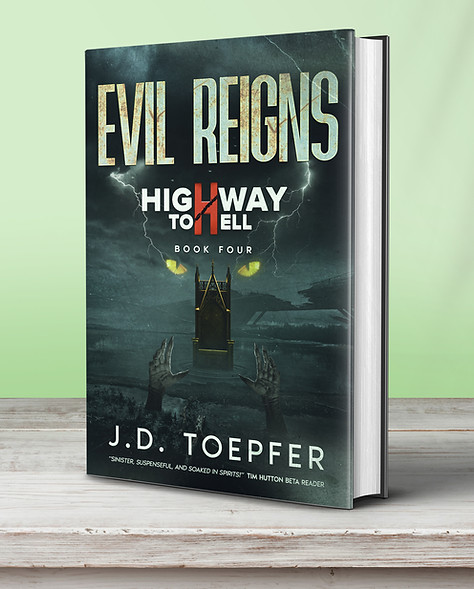
EVIL REIGNS
JACK IS BACK in the FOURTH installment of
Award-Winning
HIGHWAY TO HELL Series!
"Stephen King Meets the Exorcist"
—Page Turner's Podcast
GRAB YOUR COPY ON AMAZON ON NOVEMBER 3OTH!
REMEMBER EVIL REIGNS... BUT READERS RULE!
Search


Notes From The Curiosity Cabinet...
Why Southern Gothic Feels Different There is something quietly unsettling about old places. Not because they are haunted. Not because they are falling apart. Because they have witnessed lives we'll never fully know. I've always been drawn to stories where the setting feels as important as the people. A weathered farmhouse, an aging church, an overgrown cemetery, or a forgotten creek can carry generations of memories without speaking a single word. Long before a ghost appears—


The Stories That Stay in the Family
Every family has them. Stories that begin with, "Your grandfather always used to say..." Or... "Your aunt swore this happened." Maybe it's a tale about an old farmhouse where no one would spend the night. Perhaps it's the story of a Civil War soldier who supposedly walked a nearby road after dark. Maybe it's simply a family mystery that no one has ever been able to explain. The details often change over time. The storyteller changes. The audience changes. Yet somehow the stor


Why Folklore Survives Long After the Facts Are Forgotten
Every town has one. A lonely road people avoid after dark. An abandoned house with a story no one can quite verify. A lake that's said to be cursed. A bridge where strange things supposedly happen. Ask enough people, and you'll hear different versions of the same tale. The details change. Names are forgotten. Dates become blurred. Yet somehow the story survives. I've always found that fascinating. Why do some stories live on for generations while others disappear almost overn


Dreams and Horror: Why Our Minds Create the Most Unsettling Stories
Most of us have experienced it. A dream so vivid that, for a few moments after waking, we aren't entirely sure it wasn't real. A familiar house with rooms that don't exist. A conversation with someone who has been gone for years. A road leading somewhere impossible. The details may fade quickly, but the feeling often remains. That lingering sense of unease is one reason dreams have played such an important role in horror for centuries. Unlike most stories, dreams don't follow


Islands, Isolation, and Horror: Why Paradise Makes Us Uneasy
When most people think of islands, they picture paradise. Blue water. Palm trees. Endless horizons. Yet islands have served as the setting for some of horror's most enduring stories. Why? Because islands offer something horror thrives on: isolation. An island can be beautiful, but it is also cut off from the rest of the world. Once you're there, escape becomes difficult. Weather can change quickly. Supplies can become limited. Help may be far away. The same geography that cre


Why Unexplained Events Continue to Haunt the Human Imagination
People often assume mystery fascinates us because it promises answers. I’ve always thought the opposite was true. Mystery endures because it refuses to provide them. Long after explanations are proposed, evidence is examined, and theories are debated, certain events continue living in our imaginations because they leave something unresolved behind. The unanswered portion becomes part of the story itself. That lingering uncertainty appears throughout folklore, history, and hor


Why Midsummer Folklore Always Carries an Undercurrent of Unease
For something associated with warmth, sunlight, and celebration, midsummer folklore has always carried an unexpectedly dark edge. That contrast is part of what makes it so fascinating. The summer solstice marks the longest day of the year, a moment that should feel comforting and abundant on paper. Yet across countless cultures and generations, people attached rituals, warnings, fires, superstitions, and supernatural beliefs to this time of year as though they instinctively u


Why Poisonous Plants Appear So Often in Folklore and Horror
Long before poisonous plants became scientific warnings in gardening books, they already existed inside folklore. People told stories about belladonna, foxglove, nightshade, and other dangerous plants because they represented something deeply unsettling: the idea that beauty and danger could exist side by side in ordinary life. A flower could heal in one setting and kill in another. A garden could nourish a family while also concealing something harmful beneath its beauty. Th


Why Places Don't Let Go of Their Stories
Nearly every town has a place people speak about differently after dark. A road no one likes driving alone at night. A lake with old rumors attached to it. A forgotten building that people point toward rather than walk into. A stretch of woods where stories seem to multiply over generations, whether anyone fully believes them or not. I’ve always found that fascinating. What interests me most about folklore isn’t whether every story is literally true. It’s the emotional truth


Where the Idea for Thirteen Jars Began
The idea behind Thirteen Jars didn’t begin with a monster or a jump scare. It began with a place. Specifically, the feeling that some land carries memory differently than other places do. Northern Virginia is full of places where history and modern life exist almost on top of each other... battlefields beside subdivisions, forgotten cemeteries hidden in a forest, roads built over places where people once fought to survive. Over time, I became interested in the idea that objec


Why Discovery Matters
Some of the most memorable moments aren’t when we receive something new—they’re when we discover something hidden. A forgotten trail. A buried object. An old photograph in a drawer. Discovery creates questions, and questions are often more powerful than answers. That’s why scavenger hunts, mysteries, and stories built around hidden things continue to work so well. We’re drawn to what waits to be found.


What We Keep and Why It Matters
Old objects have a way of carrying more weight than they should. A rusted key, a handwritten note, a jar on a shelf, a tool no one uses anymore. By themselves, they may mean very little. But once time gathers around them, they become something else entirely. They outlast explanations. They remain after the people who used them are gone. That’s why places with long histories—towns like Culpeper, Virginia, founded in 1749—can feel layered in a way newer places do not. The objec


Why Short-Form Horror Works Differently
Short-form horror works very differently from longer stories. There isn’t time to build slowly or layer in complex explanations. Everything has to move with purpose. Because of that, short horror often relies on a single idea, a situation, a fear, or a moment, and pushes it as far as it can go. When it works, it’s effective because there’s no room to step back. The tension starts quickly and doesn’t let up. It’s a very different experience from a novel, where unease can build


What The Ground Keeps...
On National Paranormal Day, most conversations focus on things people claim to see—apparitions, movement, something unexplained in the moment. What has always interested me more is something quieter. The idea that a place itself can retain what happened there. Not as a memory in the human sense, but as something unresolved—something that becomes part of the environment. In folklore, this idea shows up again and again. A wrong is committed. Something is buried. Life continues


The Lake as a Character in Horror
We tend to think of horror in terms of what moves—the thing in the shadows, the figure in the doorway, the presence that shouldn’t be there. But some of the most effective horror doesn’t move at all. It waits. In Evil Reigns , Lake Ronkonkoma isn’t just a setting. It isn’t background. It isn’t scenery. It’s a presence. Real lakes already carry a certain weight to them. Depth we can’t see. Silence that feels heavier than it should. A surface that reflects perfectly, but tells


Why Storms Work So Well In Horror
There’s a moment before a storm arrives that has always felt more unsettling to me than the storm itself. The air changes first. It gets heavier. Stiller. Quieter in a way that doesn’t feel natural. It’s not dramatic. Nothing is happening yet. But something has already shifted. That’s where a lot of effective horror begins. Storms work in horror not because of the destruction they bring, but because of what they represent. They take control away. Once a storm starts, there’s


Generational Horror: When the Past Refuses to Stay Buried
Some of the most unsettling horror stories are not about a single event. They’re about something that continues. A presence, a mistake, or a force that doesn’t end with one person, but instead carries forward, moving quietly from one generation to the next. Generational horror works because it feels inevitable. The characters are not simply facing an external threat. They are confronting something that has already taken root long before they were even aware of it. In many cas


Why Roads Matter in Horror Stories
Roads have always meant more than simply traveling from one place to another. A road represents movement, change, and the possibility of crossing into the unknown. In horror stories, that idea becomes especially powerful. The road often marks the moment when characters leave the safety of what they know and begin moving toward something they do not yet understand. Think about how many unsettling moments in fiction begin with a journey. A lonely highway at night. A detour thro
The Road So Far: Writing a Series That Remembers...
When people ask where to start with the Highway to Hell series, the easy answer is Route 666 . It’s the beginning of the road, and the moment the first wrong turn is taken. But the longer I’ve worked on this series, the more I’ve realized something important: the books were never meant to reset after each installment. Each story carries something forward. In Route 666 , the danger begins quietly. It’s the kind of wrong turn that feels almost ordinary at first. The characters


The Highway So Far...
The first quarter of the year has been less about momentum and more about pressure. Evil Reigns wasn’t written to escalate for escalation’s sake. It was written to let consequences settle and to allow decisions made earlier in the Highway to Hell series to finally harden into something permanent. By the time this book begins, the storm isn’t approaching anymore. It’s already reshaping the ground beneath everyone still standing. Looking back over the past few months, what’s

bottom of page