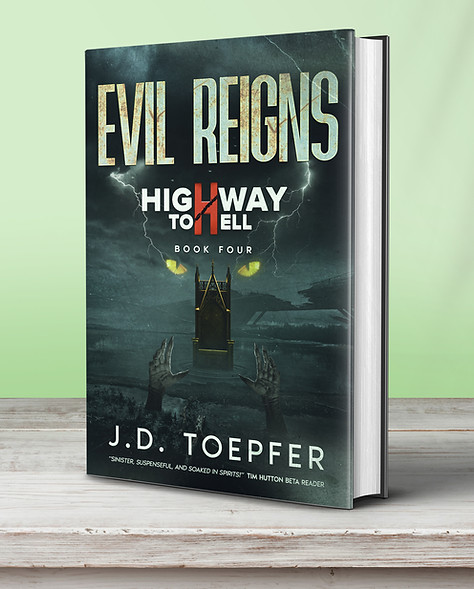
Reader Reactions: Starting the Highway to Hell
Every long road begins the same way.
Not with certainty. Not with answers. But with a decision to take the entrance ramp.
For readers discovering the Highway to Hell series for the first time, that entrance begins with Route 666—a story rooted in a real place, a real road, and a quiet, unsettling question: What happens when evil isn’t summoned… only uncovered?
When I wrote Route 666, I didn’t know how far the road would ultimately stretch. I only knew that once you merged onto it, there would be no clean exit. The story wasn’t designed to shock immediately, but to settle in—to let unease accumulate until turning back felt impossible.
Many readers sense that intention from the very first chapters.
“The story hits with a heavy, uneasy mood from the start and never really lets up.”
That response matters because it recognizes what Route 666 is doing. The dread isn’t episodic. It’s sustained. The road itself feels serious and threatening, not symbolic or theatrical. It exists as a boundary—one that’s been waiting far longer than the characters realize.
As that same reader notes:
“The idea of a cursed road tied to ancient evil feels serious and threatening, not cheesy, and the stakes stay painfully personal the whole time.”
That personal cost is deliberate. Route 666 isn’t interested in distant horror. The danger presses in on families, faith, and the everyday decisions people make before they understand what those choices will demand of them.
Another reader described the experience this way:
“Relentlessly atmospheric.”
Atmosphere, more than spectacle, is the foundation of the series. There are moments that blur the line between reality and something far darker—not through over explanation, but through restraint.
“The story doesn’t overexplain everything, letting the mystery and dread speak for themselves.”
That choice is intentional. Route 666 doesn’t rush to reveal its hand. It allows readers to sit with uncertainty, to notice the warning signs, and to feel the weight of what’s coming before it arrives. The result, as one reader put it, is the kind of book that makes you promise yourself just one more chapter, even when you know you shouldn’t.
What surprises many first-time readers is the scope hidden beneath the surface.
“What I love most is how the story moves across time. Ancient history, early America, and modern-day Kansas/Virginia.”
The road didn’t become cursed overnight. The evil tied to it wasn’t improvised. It was built—patiently—over centuries. That long memory is part of what makes the horror feel grounded. The story suggests that what’s happening now is only the latest consequence of something that has been moving toward this moment for a very long time.
For some readers, that realization is what seals the experience:
“If you like occult mysteries, religious lore, cursed highways, and ‘one wrong turn changes everything’ dread, buckle up.”
That sense of inevitability—the feeling that a single choice can quietly change everything—is the heart of Route 666. The entrance ramp is easy to miss. Once taken, the road does the rest.
For new readers wondering where to begin, this is why Route 666 matters. It isn’t just the first book in the series. It’s the foundation. The place where the rules are set, the costs are established, and the direction becomes clear.
And for readers who’ve already traveled further down the Highway, returning to the beginning often reveals how much was already in motion.
The signs were there.
The road was waiting.
And once the entrance ramp was taken, there was no turning back.


Comments